





Nuclear energy experienced a significant stagnation following the nuclear reactor disaster of 2011 in Japan. Still, the push towards clean energy and the surge in power demand from data centers that fuel the AI hype have made nuclear energy attractive again. Over 30 governments are considering, planning, or starting power programs according to the World Nuclear Association. Small modular reactors (SMRs) lead the resurgence of nuclear energy, and investors should consider them for their portfolios.
Top Regulated Brokers
What are Nuclear Energy Stocks?
Nuclear energy stocks are publicly listed companies active in the nuclear energy sector. They primarily operate nuclear reactors to generate electricity. Alternatively, investors can participate in nuclear energy through uranium mining stocks.
Why should you consider investing in nuclear energy stocks?
Nuclear energy is a cornerstone of clean energy, and small modular reactors (SMRs) represent the industry’s most significant breakthrough. They can address the tremendous energy demand posed by data centers and AI. Forecasts estimate nuclear energy investment to exceed $2 trillion by 2050. With energy needs rising, energy security a national security concern for most countries, and the need to lower carbon emissions, nuclear energy has a bright future.
Here are a few things to consider when evaluating nuclear energy stocks:
Invest in nuclear energy stocks that have signed deals with some of the most notable end-users like tech giants Meta Platforms, Microsoft, Amazon, and Alphabet
Analyze next-generation nuclear energy stocks that can power the future with disruptive technologies, including nuclear fusion reactors
Mix your nuclear energy portfolio with established nuclear energy stocks, uranium miners, and next-generation players to diversify your exposure
What are the downsides of nuclear energy stocks?
Uranium miners may struggle to meet demand, and uranium prices are volatile. Despite its clean energy appeal, opponents will try to derail or limit its potential due to concerns about nuclear waste and its environmental impact, which pose significant storage challenges. Nuclear energy experienced three major catastrophes: Chernobyl (1986), Three Mile Island (1979), and Fukushima (2011). Therefore, resistance to new nuclear reactors could delay deployment.
Here is a shortlist of attractive nuclear energy stocks:
ASP Isotopes (ASPI)
The Southern Company (SO)
Oklo (OKLO)
GE Vernova (GEV)
Vistra (VST)
Update to My Previous Best Nuclear Energy Stocks Item
In our previous installment, I highlighted the upside potential of BWX Technologies and PG&E Corporation.
BWX Technologies (BWXT) - A long position in BWXT between $215.81 and $224.00
BWXT is down over 2.00% since my entry, and I am keeping this position as analyzed, as the bullish factors remain firmly in place.
PG&E Corporation (NYSE:PCG) - A long position in PCG between $16.01 and $16.68
PCG is up over 1%, and I hold this position as I see the upside potential unchanged from the date I entered this trade.
ASP Isotopes (NASDAQ:ASPI) Fundamental Analysis
ASP Isotopes (NASDAQ:ASPI) produces, distributes, markets, and sells isotopes. Its two operating segments are Nuclear Fuels and Specialist Isotopes and Related Services. The former researches and develops technologies and methods used to produce high-assay low-enriched uranium (HALEU) and Lithium-6 for the advanced nuclear fuels target end market.
So, why am I bullish on ASP Isotopes following its post-earnings breakout?
The successful restart of its Silicon-28 enrichment facility leads the transition from development stage to a commercial platform and underpins my continued bullishness. ASP Isotopes projects 2026 revenues between $50 million and $70 million. I am equally bullish on its subsidiary, Quantum Leap Energy, which signed a non-binding MOU with a European nuclear technology firm for HALEU deliveries. Therefore, I expect its bearish balance sheet statistics to improve materially over the course of the year.
Metric | Value | Verdict |
P/E Ratio | 54.35 | Bearish |
P/B Ratio | 3.02 | Bearish |
PEG Ratio | Unavailable | Bearish |
Current Ratio | 4.39 | Bullish |
Return on Assets | -13.66% | Bearish |
Return on Equity | -103.32% | Bearish |
Profit Margin | 0.00% | Bearish |
ROIC-WACC Ratio | Negative | Bearish |
Dividend Yield | 0.00% | Bearish |
ASP Isotopes Fundamental Analysis Snapshot
The price-to-earnings (P/E) ratio of 54.35 makes ASPI an expensive stock. By comparison, the P/E ratio for the S&P 500 is 32.41.
The average analyst price target for ASP Isotopes is $13.00. This suggests excellent upside potential with acceptable downside risk.
ASP Isotopes Technical Analysis
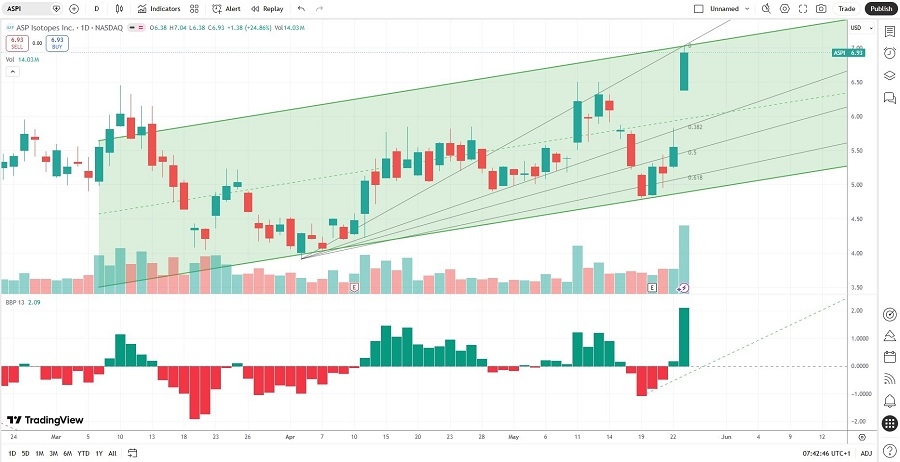
ASP Isotopes Price Chart
The ASP Isotopes D1 chart shows price action between its ascending 0.0% and 38.2% Fibonacci Retracement Fan levels.
It also shows ASP Isotopes inside a bullish price channel.
The Bull Bear Power Indicator is bullish with an ascending trendline.
My ASP Isotopes Long Stock Trade
ASPI Entry Level: Between $6.88 and $7.04
ASPI Take Profit: Between $12.61 and $13.00
ASPI Stop Loss: Between $4.64 and $4.81
Risk/Reward Ratio: 2.56
The Southern Company (NYSE:SO) Fundamental Analysis
The Southern Company (NYSE:SO) is a gas and electric utility, serving over nine million customers in 6 states. Its subsidiary Southern Nuclear Operating Company operates eight nuclear power units for Alabama Power and Georgia Power. SO is also a constituent of the Dow Jones Utility Average Index, the S&P 100 Index, and the S&P 500 Index.
So, why am I bullish on The Southern Company following its breakout?
The Southern Company secured a historic $26.54 billion loan package from the US Department of Energy to fund 16.7 GW of new generation and grid upgrades. The surge of data center load growth, up 42% year-over-year in Q1, adds a significant bullish catalyst. It resulted in 11 GW of large-load projects across 28 deals, and SO is finalizing an additional 6 GW with a prospective pipeline of 75 GW. It also upgrades two of its nuclear power plants, boosting capacity by over 20%.
Metric | Value | Verdict |
P/E Ratio | 24.06 | Bullish |
P/B Ratio | 2.86 | Bearish |
PEG Ratio | 2.67 | Bearish |
Current Ratio | 0.65 | Bearish |
Return on Assets | 3.24% | Bullish |
Return on Equity | 10.99% | Bullish |
Profit Margin | 14.46% | Bullish |
ROIC-WACC Ratio | Negative | Bearish |
Dividend Yield | 3.23% | Bullish |
The Southern Company Fundamental Analysis Snapshot
The price-to-earning (P/E) ratio of 24.06 makes The Southern Company an inexpensive stock. By comparison, the P/E ratio for the S&P 500 Index is 32.41.
The average analyst price target for The Southern Company is $101.50. This suggests moderate upside potential with decreasing downside risk.
The Southern Company Technical Analysis
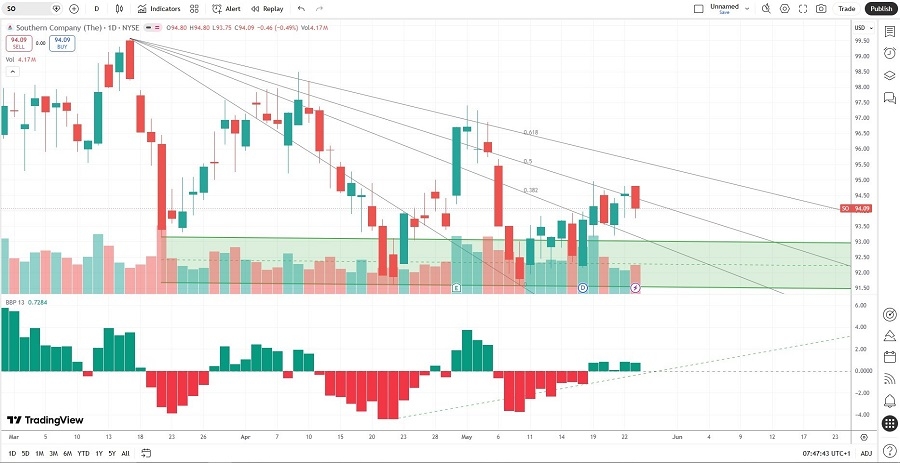
The Southern Company Price Chart
The Southern Company D1 chart shows price action between its descending 50.0% and 61.8% Fibonacci Retracement Fan levels, following a double breakout.
It also shows The Southern Company breaking out above its horizontal support zone.
The Bull Bear Power Indicator is bullish with an ascending trendline.
My The Southern Company Long Stock Trade
SO Entry Level: Between $93.75 and $94.80
SO Take Profit: Between $108.01 and $111.25
SO Stop Loss: Between $86.89 and $88.20
Risk/Reward Ratio: 2.08
Ready to trade our analysis of the best nuclear energy stocks to buy? Here is our list of the best brokers for stock trading worth reviewing.