

For over a decade, MetaTrader 4 (MT4) and MetaTrader 5 (MT5) have been the default choice for retail traders. Their widespread adoption, extensive broker support, and strong community ecosystem made them industry standards.
However, as trading environments become more sophisticated and user expectations rise, cracks in these legacy platforms are becoming increasingly noticeable. Today’s traders are not only looking for functionality—they also demand transparency, efficiency, and a seamless user experience.
This shift is one of the key reasons why cTrader is gaining traction.
The Limitations of MT4 and MT5 in Today’s Trading Environment

Despite their popularity, MT4 and MT5 were designed in a different technological era. As a result, they come with several structural limitations:
?Outdated User Experience
The interface is functional but lacks the intuitive design modern users expect. New traders often face a steep learning curve.
?Execution Transparency Concerns
MT4/MT5 do not inherently provide detailed visibility into order execution. For traders who prioritize pricing clarity and fairness, this can be a drawback.
?Heavy Reliance on Add-ons
Advanced features—such as algorithmic trading or custom indicators—often require third-party plugins or coding knowledge (e.g., MQL4/MQL5), increasing complexity.
?Inconsistent Cross-Platform Experience
Desktop versions remain dominant, while mobile and web experiences can feel like secondary adaptations rather than fully optimized environments.
cTrader: A More Modern Trading Approach
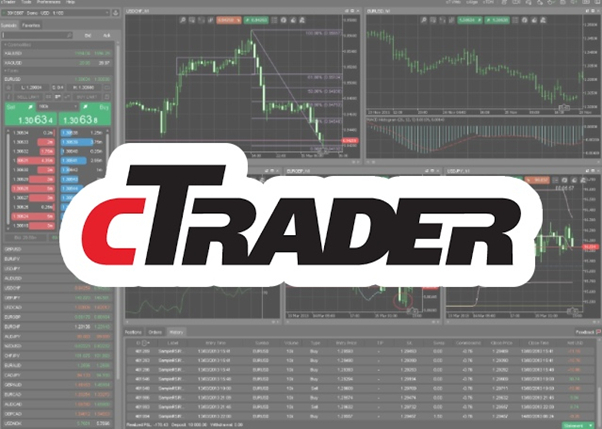
When Spotware Systems set out to create cTrader, they didn’t start with MetaTrader’s codebase. They started with a simple question: What would a trading platform look like if you designed it today, without legacy constraints?
The result is a platform that feels fundamentally different—not because it tries to be flashy, but because it prioritizes the things that actually matter to a trader.
1. True Market Transparency
The most immediate difference when you open cTrader is Level II pricing. Instead of a single spread, you see the full order book—bid and ask volumes at every price level. This isn’t a nice‑to‑have feature; it’s a critical tool for understanding where your order will actually be filled. In fast markets, that transparency translates directly into fewer surprises and more predictable execution.
2. Seamless, Visual Order Management
Where MT4 forces you into dialog boxes, cTrader lets you manage everything directly on the chart. Stop losses and take profits are draggable lines. Adding to a position, moving a trailing stop, or scaling out is intuitive—often a single click or drag. The interface is clean without being simplistic; it gives you control without getting in your way.
3. Unified Experience Across Devices
cTrader was built with a modern, API‑first architecture. The desktop application is powerful, but the web version is not a stripped‑down alternative—it’s essentially the same application running in a browser. The mobile app, widely regarded as the industry gold standard, mirrors the desktop experience so closely that switching between devices feels seamless, not disorienting.
4. Algorithmic Trading Without the Headaches
For algorithmic traders, cTrader offers cBots (C#‑based automated strategies) with a modern development environment. The platform doesn’t force you into a proprietary scripting language like MQL4/5; instead, it uses standard .NET libraries, making it far more accessible to professional developers. And because the execution model is transparent, backtesting results tend to align more closely with live performance—a perennial frustration for MetaTrader algo traders.
MT4/MT5 vs cTrader: A Practical Comparison
To better understand where the differences really lie, it helps to move beyond general descriptions and look at how these platforms compare in day-to-day trading scenarios. The table below highlights some of the most relevant distinctions from a practical perspective:
Feature | MT4 / MT5 | cTrader |
User Interface | Outdated, less intuitive | Modern, clean, user-friendly |
Execution Transparency | Limited visibility | High transparency with detailed metrics |
Algorithmic Trading | Requires MQL coding | Integrated via cTrader Automate |
Charting Tools | Good, but often needs add-ons | Advanced and built-in |
Depth of Market (DOM) | Basic or limited | Advanced, real-time |
Cross-Device Experience | Inconsistent | Seamless across all devices |
From this comparison, it becomes clear that while MT4 and MT5 remain reliable and widely used, cTrader is designed with a stronger emphasis on transparency, usability, and integration.
Exploring cTrader Through RYOEX
Of course, even the most advanced platform is only as good as the broker that serves it. cTrader’s transparency features, for example, are only meaningful if the broker provides genuine market access without re‑quotes or hidden markups.
This is where RYOEX enters the picture.
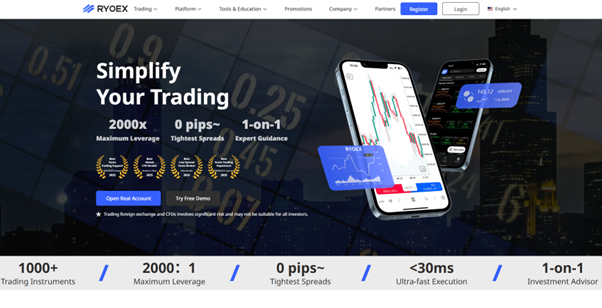
RYOEX has built its offering around the principle that modern traders deserve a broker that matches the quality of their platform. By offering the full cTrader suite—desktop, web, and mobile—with STP (Straight Through Processing) execution, RYOEX ensures that the transparency cTrader provides is real, not just cosmetic.
When you trade cTrader through RYOEX, you get:
- No dealing desk intervention – orders go directly to liquidity providers, aligning with cTrader’s transparent order book.
- Competitive, variable spreads – because you’re seeing real market depth, the spreads reflect actual liquidity conditions.
- Full cTrader feature access – including cBots, algorithmic trading, and advanced charting, with no arbitrary restrictions.
- A consistent experience – whether you’re on a desktop at your office or placing a trade from your phone, the interface, data, and execution quality remain identical.
For traders who have grown frustrated with MetaTrader’s limitations but hesitated to switch because of broker compatibility, RYOEX offers a clean, purpose‑built solution. It’s one of the few brokers where cTrader isn’t an afterthought—it’s the primary trading experience.
Final Thoughts
The evolution of trading platforms reflects a broader shift in the industry. While MT4 and MT5 laid the foundation for online trading, newer platforms like cTrader are redefining what traders can expect in terms of usability and transparency.
Adapting to new tools is not about following trends—it’s about staying efficient and competitive in a changing environment.
And for many traders today, cTrader is becoming an increasingly logical next step.