


Top Regulated Brokers
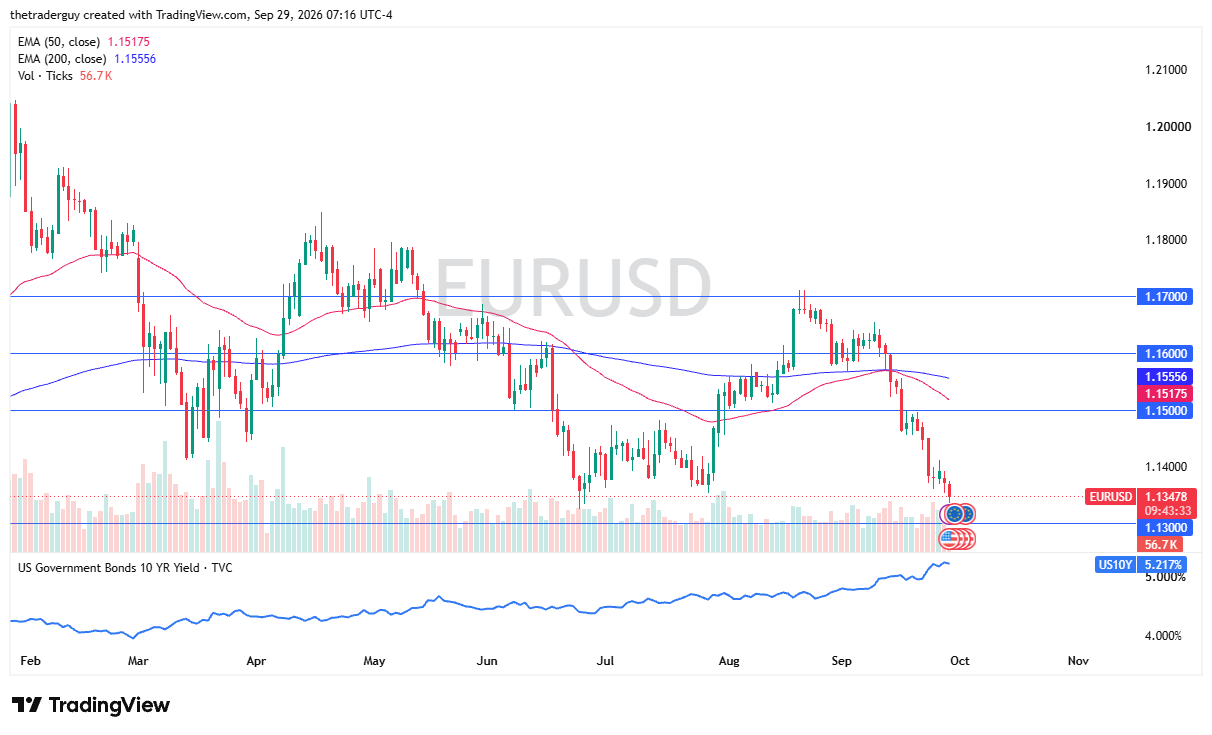
This currency pair is trying to stabilize after moving to fresh lows, but the early bounce does not yet suggest that the market has become comfortable owning euros. The EUR/USD currency pair remains in an area where value hunters may be tempted to step in, but there is little sign that the broader pressure on the single currency has disappeared.
Right now, the market is trying to weigh two forces that are closely connected. The interest-rate differential continues to favor the United States, while the energy situation remains a potential problem for Europe. Neither issue lends itself to a simple, long-term call, which is why the pair may remain sensitive to changing headlines and bond-market behavior.
Why the Euro Is Under Pressure Now
The U.S. dollar continues to benefit from comparatively high American interest rates. That rate advantage has been a major theme in EUR/USD, and it remains difficult to ignore while traders assess where U.S. and European yields may head next.
For the euro, energy remains the other major concern. Germany is still the industrial heartland of Europe, and a difficult winter energy environment could put pressure on both households and industry. If factories struggle to access reliable energy supplies, the effects could spread beyond Germany and into the wider European economy.
That is why the market is watching energy developments so closely. A currency pair such as EUR/USD may look like a straightforward rate-differential trade at times, but Europe’s energy position can quickly alter expectations around growth, inflation, and the European Central Bank.
Price Action Suggests Caution Near 1.13
The break to fresh lows reinforces the bearish tone around EUR/USD, but the market is also becoming stretched to the downside. That does not necessarily mean that the pair is ready for a sustained recovery, but it does mean that a short-term bounce would not be surprising.
The 1.13 level remains the key area beneath the market. A move below that level could attract further attention and open the door to a more meaningful decline. For now, however, the pair is trading in an area where buyers may see value, particularly if yields begin to move in favor of Europe.
The German 10-year yield relative to the U.S. 10-year yield remains an important relationship to monitor. If that gap starts to narrow, it could give the euro some room to recover. If it continues to favor the United States, rallies in EUR/USD may struggle to gain much traction.
 EUR/USD Price Chart
Energy Headlines Could Override the Charts
The bigger risk is that traders focus too narrowly on the price chart while the real driver remains the Middle East. Markets are trying to interpret what developments there may mean for crude oil flows and, ultimately, energy availability for Europe.
There are estimates that oil moving through the Strait of Hormuz is beginning to increase. If that proves accurate and sustainable, it could ease some of the market’s concern about supply disruption. That would be supportive for the euro because it would reduce one of the more troubling risks facing the European economy.
However, the situation is not limited to crude oil. Natural gas shipments from Qatar matter greatly to Germany and replacing pipeline supply with liquefied natural gas shipped from the United States is a more expensive proposition. That cost difference remains an important part of the energy story for Europe.
A Different Energy Picture Would Change Sentiment
A sustained improvement in energy flows through the Strait of Hormuz could challenge the current negative outlook for the euro. If traders become convinced that supply risks are fading, some of the pressure tied to Europe’s energy exposure could ease.
That would not remove the U.S. rate advantage, but it could make EUR/USD more capable of bouncing from the current region. A combination of softer U.S. yields, improving energy expectations, and a narrowing gap between German and U.S. bond yields would alter the current balance of risks.
On the other hand, a deterioration in the energy situation would likely keep the euro vulnerable, especially if it raises concerns about industrial activity in Germany and the wider European economy.
Rates and Headlines Remain in Focus
EUR/USD is likely to remain responsive to the relationship between German and U.S. yields, reports concerning energy flows through the Strait of Hormuz, and signals from the European Central Bank. The U.S. jobs report later in the week adds another element for dollar traders to consider.
The next few sessions may show whether the current area becomes a platform for a temporary recovery or whether the market remains focused on the risks that have kept the euro on the defensive.
Ready to trade our EUR/USD analysis? Here is our list of the top brokers worth checking out.