


The broader cryptocurrency market remains under pressure, and Bitcoin is once again acting as the clearest barometer of investor appetite for risk. After failing to hold its recent range, Bitcoin has slipped back toward the low-$60,000 area, weighed down by a familiar mix of spot ETF outflows, macro caution, leveraged liquidations, and weak sentiment across digital assets.
Top Regulated Brokers
At the time of writing, Bitcoin is trading near $61,300, down about 3.2% over 24 hours, according to data provided by TradingView. Over the past 90 days, BTC has traded between roughly $60,900 and $82,100, leaving it down about 13% from its mid-March level. The 30-day picture is weaker, with Bitcoin down nearly 24% from its level a month ago.
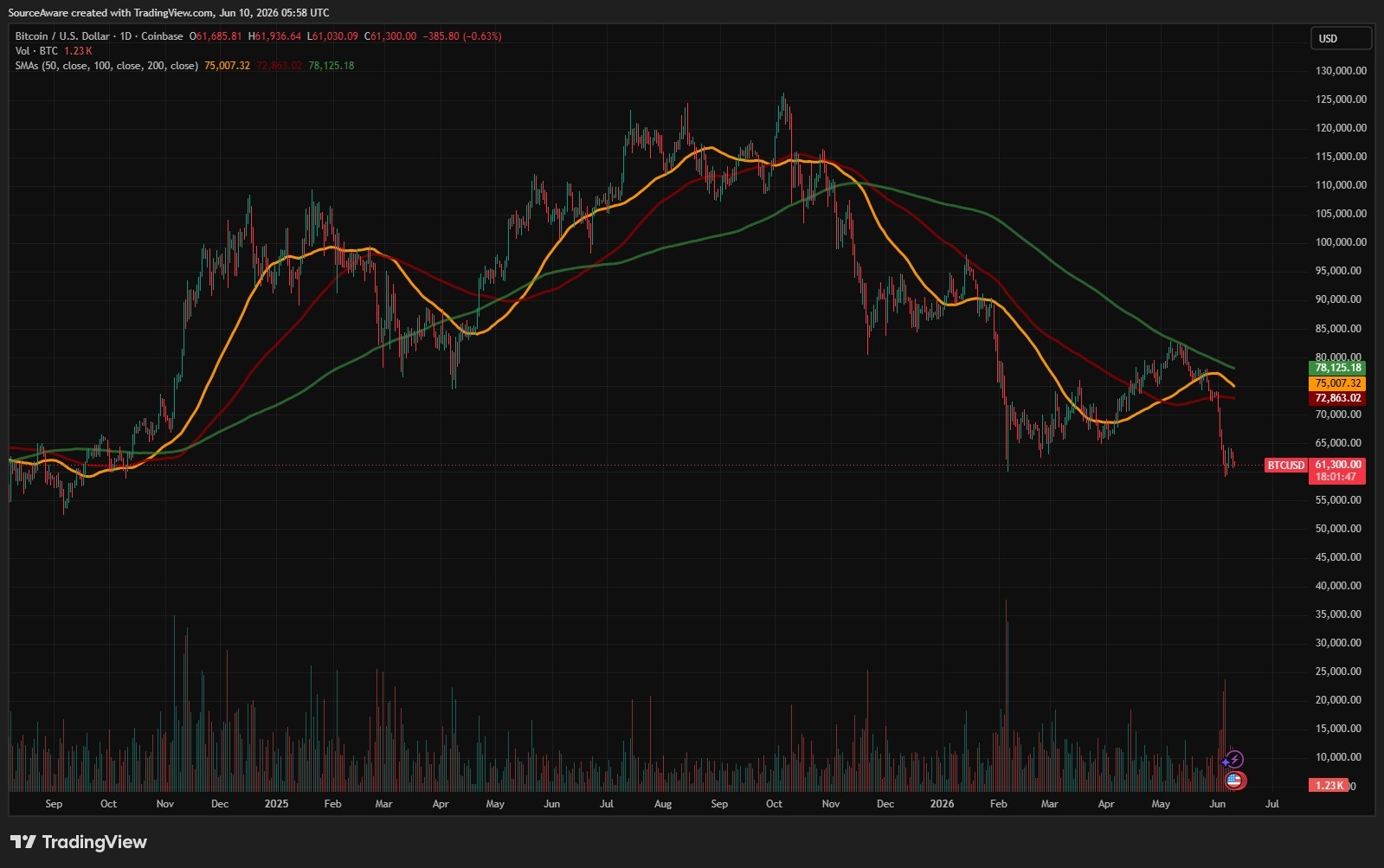
BTC/USD TradingView chart placeholder
In typical crypto fashion, as goes Bitcoin, so goes the broader market. Traders have reasons to be grumpy: rallies are being sold and liquidity is thinner, while investors are demanding stronger reasons to hold risk assets.
Bitcoin’s latest weakness appears to be driven by several overlapping pressures rather than one single headline.
The first is institutional flow. Spot Bitcoin ETFs were a major support for BTC during stronger phases of the cycle, but recent reports of heavy ETF outflows have changed the tone. When regulated capital moves out of Bitcoin products, it removes one of the main demand channels that supported the market earlier in the year.
The second factor is macro. Bitcoin still trades like a high-beta liquidity asset when investors become cautious. Rising yields, a stronger dollar, or fading expectations for easier monetary policy can all weigh on BTC because Bitcoin does not produce yield. When cash and Treasuries become more attractive, some capital rotates away from crypto exposure.
The third factor is leverage. Crypto markets often exaggerate moves because leveraged positions get forced out quickly. Once Bitcoin loses a technical level, liquidation pressure can turn a controlled pullback into a sharper decline. This has played a notable part in the recent market action, especially as BTC moved toward its 2026 lows.
From a technical perspective, the key area to watch is the zone around $60,000 to $61,000. If Bitcoin continues to hold that region, the market may attempt another relief rally. But a clean break below that area would likely deepen the crypto winter narrative and put more pressure on altcoins.
As for the upside case, Bitcoin needs ETF flows to stabilize, macro pressure to ease, and spot demand to return. Without those conditions, BTC may continue to trade defensively even if long-term holders remain committed.
Canton: A Different Kind of Relative Strength
While Bitcoin has been dragged lower by macro and sentiment pressure, Canton (CC) has shown a notably different price profile.
At the time of writing, Canton is trading near $0.165, up about 1.6% over 24 hours and 11.3% over the past 7-days, making it one of the standout performers in an otherwise sea of red.
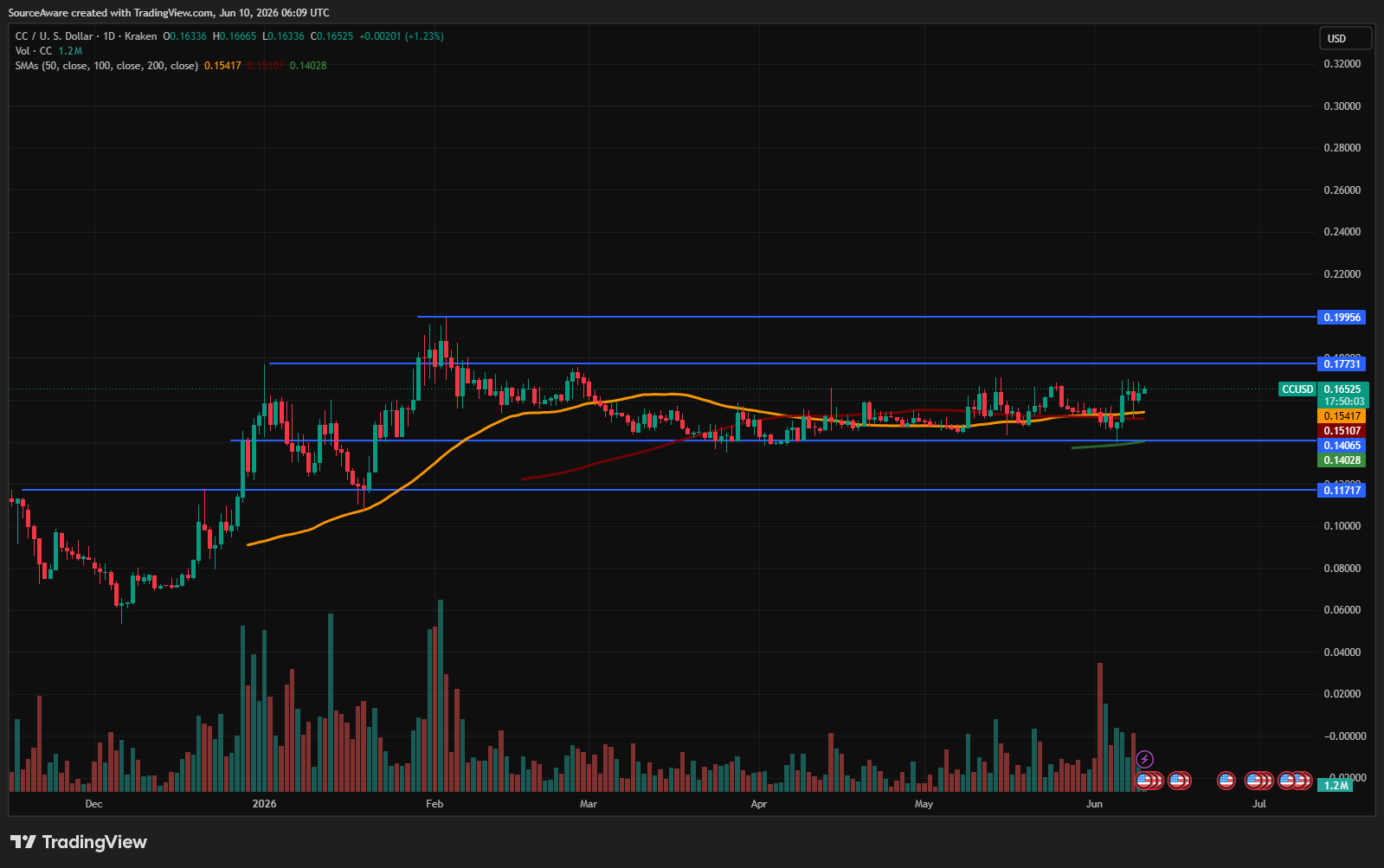
CC/USD TradingView chart placeholder
As shown in the chart above, over the past 90 days, CC has traded between roughly $0.14 and $0.17. That is a fairly tight channel compared with the broader crypto market, and the token resilience is demonstrated in the fact that it is also up about 12% over that three-month period.
That resilience matters because it has occurred during a period when Bitcoin has weakened and broader crypto sentiment has remained fragile. This underscores the growing institutional narrative that is quietly reshaping the crypto landscape and setting up the big winners in the next bull market cycle.
The core reason is that Canton is not being viewed only as another speculative Layer 1. Its story is tied to regulated finance, tokenized assets, stablecoin settlement, and institutional blockchain infrastructure. Canton Network’s public materials emphasize privacy-preserving, compliance-aware infrastructure designed for financial institutions, with use cases around tokenized cash, securities, settlement, and collateral movement.
And its partnership with the DTCC and work with Fed-eligible securities only solidifies its appeal to the institutional crowd. The network has also been connected to major institutional names through validator roles, integrations, and tokenization pilots. Visa announced in March that it would join Canton Network as a Super Validator, and recent reports have pointed to additional stablecoin settlement testing involving Visa, Brale, and Canton infrastructure.
Separately, reports around a potential Grayscale Canton ETF filing have added another layer of institutional-access speculation, though that should be treated as a catalyst to monitor rather than a guarantee of future demand.
My Take on Bitcoin and Canton
Bitcoin remains the market’s liquidity signal. Right now, that signal is cautious. ETF outflows, macro pressure, and weak technical structure are keeping BTC under pressure, and the market needs a clear shift in flows or sentiment before the bullish case becomes convincing again.
Canton is more interesting on a relative-strength basis. It has held a consistent three-month channel despite crypto winter conditions, and its recent support appears tied to a real institutional narrative: tokenized Treasuries, stablecoin settlement, validator participation, custody infrastructure, and interoperability.
That does not make Canton immune to broader market weakness. If Bitcoin loses the $60,000 area, CC could still pull back with the rest of the market. Yet provided Canton holds its channel and continues to attract institutional-finance headlines, it deserves attention as one of the more resilient crypto assets in a weak field.
For now, Bitcoin is under stress in the market. Canton is showing where some investors are still willing to look for structure, utility, and relative strength.
Ready to trade our analysis of Bitcoin and Canton? Here’s our list of the best MT4 crypto brokers worth checking out.