


Bitcoin (BTC) has spent the past week under pressure, with the world’s largest cryptocurrency once again failing to hold upside momentum as broader risk appetite weakened. After topping above $67,000 early last week, BTC briefly slipped back below $62,000s on Tuesday, dragged lower by a broader selloff in risk assets and renewed weakness across the crypto market.
Top Regulated Brokers
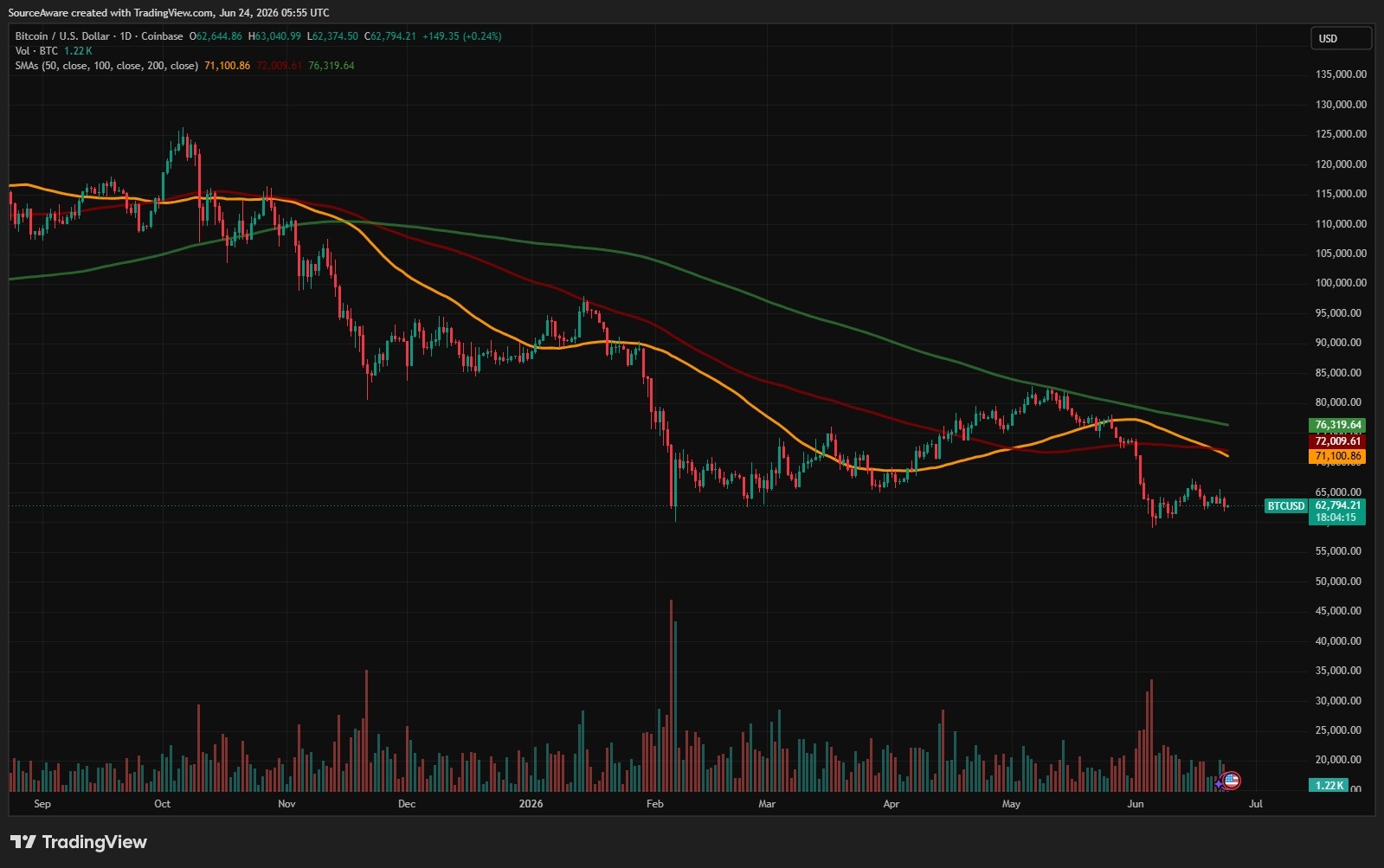
BTC/USD 1-day chart. Source: TradingView
Bulls have defended this area several times in recent weeks, but each bounce has struggled to attract sustained follow-through. A clean break below $60,000 would likely deepen the bearish tone and bring the “crypto winter” narrative back into sharper focus.
The latest decline has been especially notable because it has not happened in isolation. Bitcoin’s slide has come alongside pressure in technology shares, particularly AI and chip-related stocks, suggesting that crypto is still trading more like a high-beta risk asset than a defensive alternative. As the U.S. dollar strengthened and equity markets turned lower, digital assets followed the risk-off tone.
The selloff also triggered a fresh wave of liquidations across crypto derivatives markets, with hundreds of millions of dollars in leveraged positions wiped out. Ether and major altcoins fell harder than Bitcoin, reinforcing the view that traders are reducing exposure to the more speculative parts of the market first. That kind of liquidation-driven move often signals that bullish positioning had become too fragile to survive a broader macro pullback.
For now, the key level for Bitcoin remains the psychologically important $60,000 area. A decisive break below that zone would likely deepen the bearish tone and raise the risk of another leg lower. On the other hand, if the dollar cools or equity markets stabilize, Bitcoin could find room for a short-term relief bounce. But the broader picture remains cautious.
At the time of writing, Bitcoin trades at $62,794, a decrease of 4.45% on the 7-day chart.
Regulation Takes Center Stage
Beyond price action, regulation continues to be one of the major overhangs keeping the crypto market in a winter-like environment. Stablecoins are once again at the center of that debate.
U.S. regulators have recently moved forward with proposed customer identification rules for stablecoin issuers under the GENIUS Act framework. The proposal would push stablecoin companies closer to the standards applied to traditional financial institutions, including requirements around customer verification and compliance.
For supporters, this could help legitimize stablecoins and make them safer for mainstream payments. For the crypto industry, however, it also raises questions about costs, privacy, decentralization, and how much of the existing stablecoin market will be reshaped by bank-style oversight.
Stablecoins are especially important because they act as the bridge between traditional money and the crypto economy. They are used for trading, settlement, cross-border transfers, and as a Dollar substitute inside crypto markets. Any uncertainty around how they will be regulated affects far more than just stablecoin issuers. It will impact exchanges, DeFi platforms, payment companies, and liquidity across the entire digital asset space.
As for investors, the question is whether regulation becomes a bridge to mainstream adoption or another weight on market activity. Clear rules could eventually support institutional confidence, especially if they give exchanges, issuers, and payment firms a more predictable framework. But the transition period is messy, and markets do not like uncertainty.
That is why the current environment still feels winter-like. Crypto has seen rallies, but not enough conviction. Bitcoin has found buyers near major support, but not enough strength to rebuild a convincing uptrend. Stablecoins may become more legitimate under new rules, but the market does not yet know what the final version of those rules will look like.
My Take on Bitcoin and Stablecoins
Bitcoin traders should watch the $60,000 to $62,000 support zone in the near term. Holding that area could allow for a relief bounce, especially if the dollar cools or equity markets stabilize.
A break below $60,000 would be more concerning. It would likely trigger another round of technical selling, add pressure to altcoins, and reinforce the idea that crypto remains trapped in a winter-style environment despite ongoing institutional and regulatory development.
For now, the message is simple: Bitcoin is still trading as a macro risk asset, while stablecoin regulation remains one of the most important long-term stories for the crypto market. Until price action improves and the regulatory path becomes clearer, crypto may struggle to fully shake off winter conditions.