


There are a host of different applications of blockchain technology that are billed as transforming society, but one of the most surprising use cases that has arisen to captivate the public is prediction markets.
With so much uncertainty these days, from elections to financial markets, prediction markets have become a popular way to guess what might happen next. So maybe it's not that surprising at all, as humans have sought ways to get a glimpse of what will happen in the future, utilizing services ranging from psychics to astrologers and tarot readers.
On prediction market platforms, people bet real money on events, and the prices show what the crowd thinks is most likely. Polymarket, started in 2020 by Shayne Coplan in New York City, stands out as a leader. It began as a small project during the COVID-19 pandemic to fight misinformation by putting a price on events. Now, it has grown into a multi-billion-dollar industry that is changing how we predict everything from politics to pop culture.
The Rise of Polymarket: From Startup to Industry Leader
Polymarket started out with new ideas but also faced some challenges. It runs on the Polygon network and uses USDC as the platform currency, setting itself apart from regular betting sites by being decentralized and transparent.
But the road hasn't been all roses. In 2022, Polymarket paid $1.4 million to settle with the U.S. Commodity Futures Trading Commission (CFTC), which limited access for U.S. users. The company then focused on growing internationally, drawing in crypto fans who bet on things like crypto prices and world events.
By 2024, it had raised $70 million from investors such as Peter Thiel's Founders Fund and Ethereum co-founder Vitalik Buterin, helping it expand further. The biggest growth happened in 2024 and 2025, thanks to major events like the U.S. presidential election.
Explosive Growth in Trading Volume and User Engagement
In 2024, Polymarket's total trading volume reached $9 billion, and December alone had 314,500 active traders, a huge jump from earlier in the year. In 2025, prediction market activity grew even more, hitting $44 billion overall, with Polymarket making up $21.5 billion of that. Some weeks saw over $2 billion in trades, and monthly records kept breaking into 2026, with open interest close to $500 million.
By December 2025, sports, politics, and crypto each had over $1.2 billion in trading volume, showing the platform was expanding beyond just elections. Polymarket returned to the U.S. market in 2025 by buying QCEX, a CFTC-regulated exchange now called Polymarket US, which helped it grow at home.
New partnerships with DraftKings, the NHL, and OpenAI's World App showed it was becoming more mainstream. By late 2025, Polymarket's value was estimated at $12-15 billion, ten times more than earlier that year, helped by a $2 billion investment from Intercontinental Exchange, which owns the NYSE, valuing it at $9 billion.
How Prediction Markets Outperform Traditional Forecasting
Beyond a financial powerhouse, Polymarket's growth has been transformative. Traditional forecasting relies on polls, experts, or models, often biased by ideology or limited data. Prediction markets, however, harness "the wisdom of crowds" through real-money incentives: bettors stake capital on outcomes, aggregating dispersed information into real-time probabilities.
Research from the University of Pennsylvania and Iowa Electronic Markets shows these platforms regularly outperform experts, as financial skin in the game encourages honesty and rapid updates. For instance, during the 2024 U.S. election, Polymarket accurately predicted Donald Trump's victory, outpacing polls that favored his opponent.
Today, markets cover binary yes/no bets on Fed rate decisions (e.g., 91% chance of no change in March 2026), Oscars winners, or SpaceX IPO valuations, with volumes in the hundreds of millions.
Crypto Market Reacts: Hyperliquid's Price Surge
Evidence of the hype (pun intended) around prediction markets showed up in the crypto market on Tuesday. Hyperliquid (HYPE), a novel Layer 1 (L1) blockchain focused on decentralized perpetual exchange services, announced plans to integrate prediction markets into its platform, and its price surged nearly 20%.
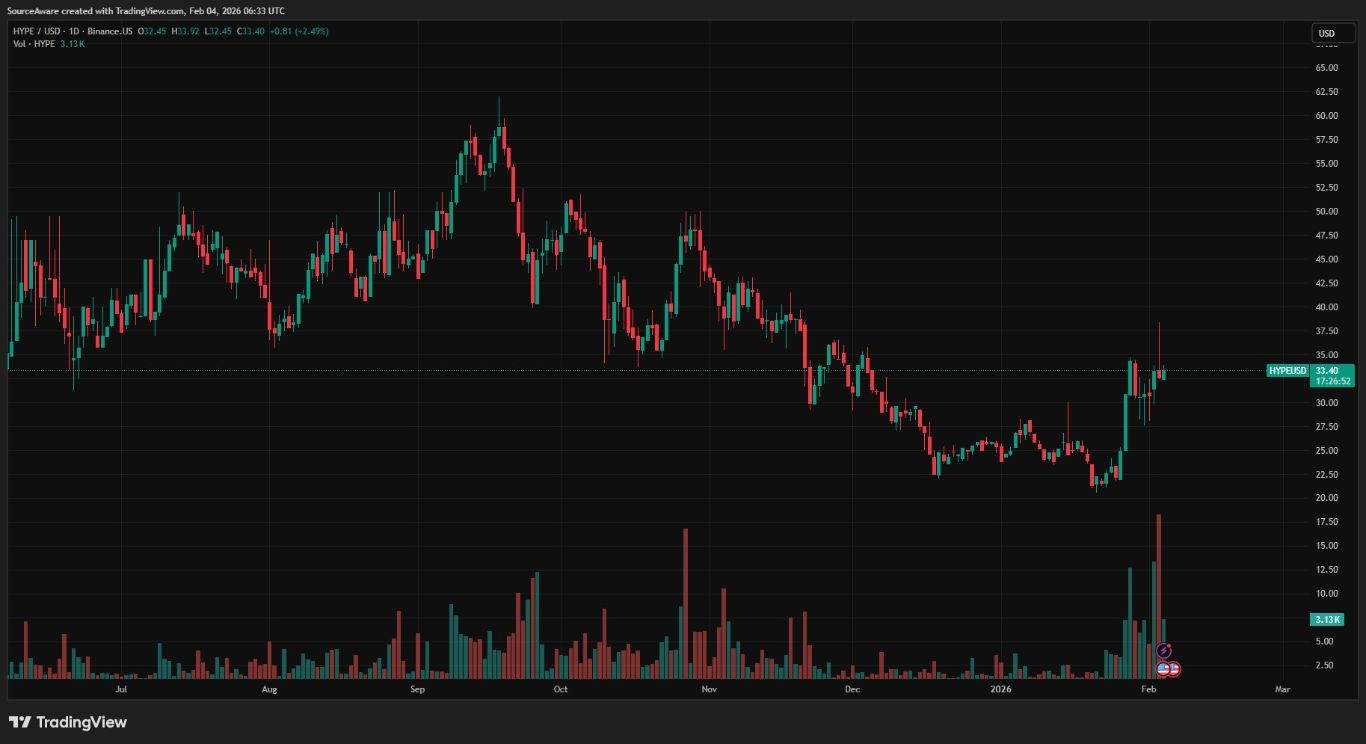
This pump came amid broad market struggles, with Bitcoin down 15% on the week while Ether (ETH) has plunged 25%. The rally didn't hold as broader weakness prompted many to take profits on the unexpected pump, but the incident demonstrates the interest and energy behind the topic.
Changing the Game: Real-World Impact and Applications
One thing that makes prediction markets most appealing is that they are changing the game by letting people trade on their beliefs. They give investors early warning signs and often do better than traditional ways of judging political risks, especially when machine learning models use market data instead of party ties.
Companies use these markets to measure public opinion, and news outlets like The Wall Street Journal now report on Polymarket odds. This makes forecasting more open to everyone and less reliant on expert pollsters, creating a new way to make decisions.
The Future of Prediction Markets
Looking ahead, as volumes approach $3 billion monthly, prediction markets like Polymarket are poised to integrate deeper into finance and society. They represent a shift toward user-owned, incentive-driven intelligence, where crowdsourced truth trumps top-down analysis. In a world craving clarity, these platforms aren't just betting on the future; they're defining it.