


Much of the focus in the crypto market was on the Fed and its latest decision on interest rates, which ultimately held steady, as was widely expected by the market.
Bitcoin (BTC) largely traded between $88,000 and $90,000, though bears did try to break support at $86,000 after bulls tested resistance at $91,000.
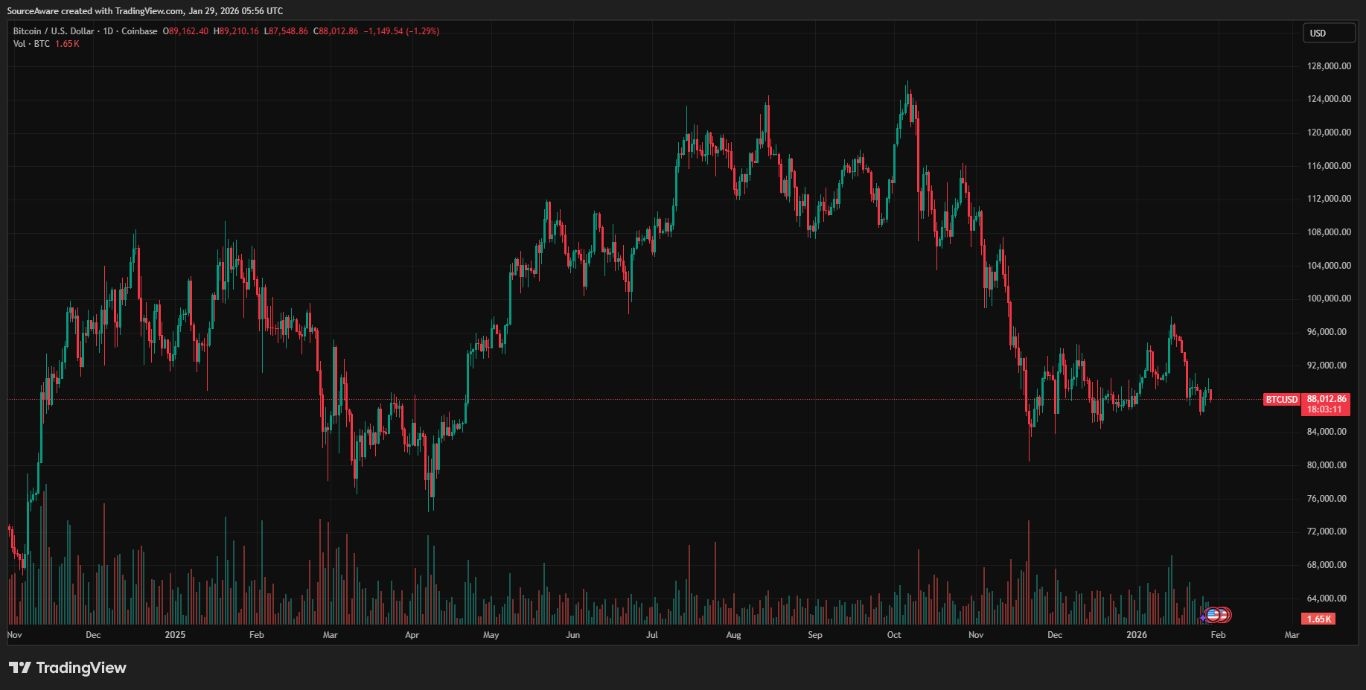
Across the ecosystem, analysts have warned crypto folk not to get their hopes up for a major rally soon, with most projecting that things could trade sideways through the end of Q1. At the time of writing, Bitcoin trades at $88,012, a decrease of 2% over the past 7-days.
The Rise of Tokenization
While crypto prices are stagnant, major developments in the realm of tokenization are accelerating, and they promise to reshape the face of finance.
Tokenization is the process of converting real-world assets (RWAs) like stocks, bonds, real estate, and commodities into digital tokens on blockchain networks. By representing ownership via secure, programmable tokens, it eliminates intermediaries, reduces transaction costs, enables instant settlements, and unlocks 24/7 global trading.
For years, investors have lamented the longstanding inefficiencies in traditional finance, such as slow clearing processes and limited accessibility. But with the capabilities of blockchain and smart contracts, those issues become moot, with the technology promising to boost liquidity and democratize investments.
But tokenization is about more than just boosting efficiency; it's a foundational shift toward a borderless, programmable financial system. In payments, stablecoins like Tether (USDT) and USDC have exploded, with Latin America and the Caribbean leading adoption at 71% for cross-border transactions.
Asset managers are tokenizing money market funds for on-chain liquidity management, offering yields with crypto-native safeguards. Public markets see tokenized equities and ETFs emerging, allowing seamless integration between traditional and digital liquidity pools. Custodians and banks are scaling pilots to production, recognizing tokenization's potential for new revenue streams and operational resilience.
According to the recently released 2026 Thematic Outlook from BlackRock, crypto and tokenization are pivotal, market-driving themes shaping the future of finance. The report positions blockchain technology not as a speculative asset class, but as a foundational tool for modernizing access to traditional financial markets. BlackRock emphasizes that this shift enables faster, more secure, and lower-cost transactions by reducing reliance on intermediaries.
Some projections indicate tokenized assets could surge from $22 billion today to $11 trillion by 2030, driven by institutional adoption and regulatory clarity. For investors, tokenization means fractional ownership of high-value assets, lowering barriers for retail participants and emerging markets. It also enhances transparency through immutable blockchain records, reducing fraud risks and enabling automated compliance via smart contracts.
Institutions Make Their Move
Recently, several announcements have shown that Wall Street is well on its way to preparing for the tokenization shift.
On January 19, the New York Stock Exchange (NYSE) broke the news that it is developing an in-house tokenized securities platform. Pending regulatory approval, this venue will enable 24/7 trading of tokenized stocks and ETFs with instant settlement, blending NYSE's matching engine with blockchain for dollar-sized orders and stablecoin funding.
Along with other TradFi stalwarts like Citigroup and Bank of New York Mellon at its side, NYSE aims to bridge traditional and digital markets, allowing fungible trading between tokenized and conventional securities. This move signals mainstream validation, potentially accelerating adoption among institutions hesitant about blockchain.
And in December, the Depository Trust & Clearing Corporation (DTCC) received SEC no-action relief, authorizing its subsidiary, the Depository Trust Company (DTC), to tokenize DTC-custodied assets starting in the second half of 2026. This includes Russell 1000 stocks, major ETFs, and U.S. Treasuries, with tokens retaining identical rights and protections as traditional forms.
DTCC's partnership with Digital Asset will mint Treasuries on the Canton Network (CC), targeting $100 trillion in custodied securities for digital eligibility. By enabling seamless conversion between tokenized and book-entry formats, DTCC is addressing custody and settlement hurdles, paving the way for on-chain collateral mobilization and programmable workflows.
These announcements underscore tokenization's maturation from hype to infrastructure. For Bitcoin, this ecosystem growth could enhance its utility as collateral in tokenized systems, bolstering long-term demand. As finance evolves, look for tokenization to become the blueprint for a more inclusive, efficient global market, with BTC at its digital forefront.
We hope you enjoyed reading our analysis of what’s going with Bitcoin. If you’d like to trade with one of the best crypto brokers, check out our list.